
 I came across this problem while setting up Docker on my OSX environment , and after searching the web , I found a method that works well, and cures the problem.
Basically once the Virtualbox VM is created you need to edit the network adapter drivers and set them to "PCNET-FAST III" instead of the paravirtualised drivers. You need to do both adapters, and then restart boot2docker.
You will notice that you get the correct settings now in your /etc/resolv.conf file.
This was annoying me, and meant I had to reset the settings in the above file everytime I start docker - which is not ideal.
Hope this saves you some time.
I came across this problem while setting up Docker on my OSX environment , and after searching the web , I found a method that works well, and cures the problem.
Basically once the Virtualbox VM is created you need to edit the network adapter drivers and set them to "PCNET-FAST III" instead of the paravirtualised drivers. You need to do both adapters, and then restart boot2docker.
You will notice that you get the correct settings now in your /etc/resolv.conf file.
This was annoying me, and meant I had to reset the settings in the above file everytime I start docker - which is not ideal.
Hope this saves you some time.
Showing posts with label Apple. Show all posts
Showing posts with label Apple. Show all posts
Thursday, 11 June 2015
VM created by boot2docker init does not have DNS set up correctly - heres how to fix it
I came across this problem while setting up Docker on my OSX environment , and after searching the web , I found a method that works well, and cures the problem.
Basically once the Virtualbox VM is created you need to edit the network adapter drivers and set them to "PCNET-FAST III" instead of the paravirtualised drivers. You need to do both adapters, and then restart boot2docker.
You will notice that you get the correct settings now in your /etc/resolv.conf file.
This was annoying me, and meant I had to reset the settings in the above file everytime I start docker - which is not ideal.
Hope this saves you some time.


Sunday, 7 April 2013
Apple computing can change the end user computer landscape for ever.

As a long time computer professional, I have lived and worked through the mainframe, mini computer , LAN based and now cloud computer eras. I have seen them all, large and small, and the changes that have affected our industry, which does love to evolve, sometimes rapidly. It also tends to have very painful outcomes for the incumbents - just ask IBM about OS/2.
There is absolutely no doubt we are living through one of these large changes at the moment and it is coming in several forms , that all point to a post-PC era - reference below. This blog post is being typed on a Google Chomebook from Samsung, and a lot of the research for the article was done using my iPad and Google Nexus 4 phone. No PC involved at all. I fully accept that I embrace technologies faster than most, but I never jump to join technologies and think carefully before I act. So if you are reading this on your trusty old PC with windows XP installed , then bear with me, you will get to this future faster than you think.
Apple really did push a large boulder over a cliff when they introduced the iPhone, intentionally or not they really did change the industry. Google could see the wisdom in this move and jumped on the bandwagon and built its' own operating system and infrastructure to compete, Microsoft did nothing but release another tired old version of Windows phone which crashed horribly.
At the same time Amazon introduced the world to the concept of cloud computing for the enterprise, which was first seen as a curiosity, but is now in any good CTO's strategic planning as the way forward. Google also saw this as an opportunity and introduced fairly quickly the concept of their cloud applications, and Dropbox showed the way for cloud storage. Microsoft was not so badly placed here, but really did not execute on its' good start with Hotmail, and basically seemed to do nothing, until this year when they released Office365 - years behind its' competitors. Its' cloud offering is not that amazing or different , but does offer some good features.
Microsoft have always been strong on the desktop, which they have owned for a decade, but with another badly received release with Windows 8 in all its' forms, it is currently very vulnerable PC sales are dropping off dramatically while tablet and smartphone sales are booming. Microsoft is very badly positioned in both these markets and that is where the end user industry is heading. They will be fine in the corporate landscape for many years to come on the server side, but the desktop will change. The cloud means you can use anything as a client access device. Why pay $500 dollars per employee device when you can pay $200 - simple economics. Even better encourage your staff to bring their own - BYOD - even cheaper. If you are paying $100-$200 for a client device - why would you spend $200 on Microsoft office, when most apps are $5 for you Apple or free from Google?
Another cash cow slaughtered.
If Apple wished to grab this once-in-a-generation opportunity all they need to do is have a re-think about prices and product ranges, and simply introduce a budget range - nothing smarter than that. Google are already trying with their Chromebook, but they are not for everyone. They are having a lot more success with their Android smartphones - just see the sales figures and all the very cheap Chinese clones. If Apple were to partner with HTC,Asus or Dell and bring out a budget range of laptops, tablets and smartphones - cheap iPhone is already rumoured - just think how disruptive this would be. Google would have a real fight on its' hands and the competition would be fierce. Microsoft, and in truth a lot of other players would be next to pointless. Their tiny share in the smartphone market would evaporate and the their tablets which are already dying on their feet would disappear. They would become significantly less relevant in the new era, and we would at last have two decent competitors.
This would mean Apple going against a lot of its' historical DNA, and it has always sworn they would not do this, but this strategy is what nearly bankrupted them in the 1990's. They need to be very careful about how they proceed from here. Google is now their main competitor, and not just for devices but for the cloud experience that they are offering to their customers, and Google is a lot more open, and offers most of its' products for free.
I personally hope they do, as we have seen significantly more innovation since Apple and Google really got stuck in, as Microsoft had become stale. Internet explorer was a prime example. Once Mozilla, Google and Apple started to innovate IE became a much smaller player in the field.
Here is a link I read recently on the topic, but there are literally hundreds of other examples - just Google it ;-)
Research from Gartner on post PC era
Friday, 5 April 2013
Using an encrypted git repository on Dropbox to store my puppet code in the Cloud.

Today, most technologists have said they love the cloud storage paradigm and to have files and configs at their finger tips , no matter where they are , or how they access them.
Dropbox was arguably the first, easiest and globally available cloud storage solution out their, and it's the one I continue to use today. Like all cloud solutions - apart from owncloud - they have one drawback, who else can look at your files? This tends to make users suspicious and cautious about what they are prepared to store in the cloud, me too. As I control various ssh keys with my puppet code, I certainly don't want people having access to these.
So the solution I found was Truecrypt - a great open source project that allows you to create encrypted volumes that you can mount on all popular operating systems, including Linux, OSX and Microsoft. As I use all three of these systems at various times, it gives me great coverage. In the post PC era, it would be nice to see IOS and Android versions available in the future, but in all honesty I have not seen a real need yet.
My purposes only required a small amount of space, as code does not generally take up too much room, so I only made it 10MB. Your mileage may vary of course. There are good tutorials on the Truecrypt web site, and if you like what you see, then please donate to the project.
Once Truecrypt has been installed , created your volume and you have mounted it , you can now create your git repository using standard git commands like so:
git init --bare project.git
You can then take the project you have been working on your local hard drive, and commit it to your new git repo, like so
git remote add origin /media/truecrypt1/git/project.git
git push -u origin master
That's all there is too it, so now I have my puppet git repository where ever I go, and I can very quickly bring a machine up to my requirements with all the settings and packages I need to get work done with puppet and a few git commands. It literally saves hours of time, and I can rest easy in the knowledge it is safe in the cloud.
You can obviously use Truecrypt for storing all sorts of other things in the cloud, as I do. If you want to make sure only you can see sensitive data then this a good way to go.
Saturday, 28 May 2011
Setting up an Adhoc wifi hotspot for your iPad using Ubuntu Linux

Well, since moving into my flat in Berlin, I have been stuck without wifi, which has rendered my iPad a little less useful than it was before. The flats just supply you with an RJ45 socket in the wall and an Ethernet cable.
So knowing how flexible Ubuntu Linux is, I thought I would have a look around and see if there was a way to set it up. There were lots of very good articles, a blog posts on the topic, and the truth is with Linux it couldn't be easier.
You basically just have to click on you network connection icon in the Gnome panel, and select "Create new wireless network" , give it a name and select the security type.

The only thing I have read, and found with my wifi network adapter is that they don't always support all forms of security, so you will need to test.
I started with no security, then WEP 40bit, then WEP 128bit and finally WPA. Your mileage may vary, so test them all.
It works perfectly, and I was able to download my newspapers , books, films etc etc.
Saturday, 27 June 2009
Only a fool could possibly think Linux is not ready for the desktop
The evidence is everywhere, and it became even more apparent a few seconds ago when I needed to get a few albums for my daughter. I started looking around the airports shops only to find that they have given up selling the old CD hardware. So I thought I will just log on to the net and download them from the Amazon mp3 store, DRM free of course. My laptop connected immediately to the wifi connection, and I was up and connected to a network I had never seen before in seconds.
I have had the Amazon mp3 downloader software on my laptop for a while, so getting them was a 1 minute point and click with my browser, and voila! , they are now on my hard drive. I have just uploaded them to my Ipod mini using Rythmbox , and they are playing a treat.
All this was done on my Dell XPS 1330 with Ubuntu 9.04 Linux happily sitting on the disk, with not a whiff of any of Gates or Jobs proprietary nonsence anywhere. I'm typing this post with the latest version of Googles Chromium browser and feeling very smug ;-)
Would I change any of this for Windows 7 or Snow leopard? Not on your life, why would I possibly want to waste £200 on an OS that comes with zero apps, when I have a fully working fully functioning system that offers so much and delivers on a daily basis.
Which albums I hear you cry. Green Days 21st Century Breakdown and the Gossips Music for Men. They would not normally be my cup of tea, but they are for my daughter.
If you want to free yourself from the Blue screen, costly, virus ridden , expensive, slow , proprietary hell that is Windows and hardware lock-in that is Apples OSX, then just click here.
I have had the Amazon mp3 downloader software on my laptop for a while, so getting them was a 1 minute point and click with my browser, and voila! , they are now on my hard drive. I have just uploaded them to my Ipod mini using Rythmbox , and they are playing a treat.
All this was done on my Dell XPS 1330 with Ubuntu 9.04 Linux happily sitting on the disk, with not a whiff of any of Gates or Jobs proprietary nonsence anywhere. I'm typing this post with the latest version of Googles Chromium browser and feeling very smug ;-)
Would I change any of this for Windows 7 or Snow leopard? Not on your life, why would I possibly want to waste £200 on an OS that comes with zero apps, when I have a fully working fully functioning system that offers so much and delivers on a daily basis.
Which albums I hear you cry. Green Days 21st Century Breakdown and the Gossips Music for Men. They would not normally be my cup of tea, but they are for my daughter.
If you want to free yourself from the Blue screen, costly, virus ridden , expensive, slow , proprietary hell that is Windows and hardware lock-in that is Apples OSX, then just click here.
Thursday, 23 April 2009
What a week on the IT merry-go-round. Anyone for an IBMphone?
Being something of an old timer in the world of IT I thought I had seen pretty much all there was to see in the sometimes strange company interplays that are stuff of this industry. However, I was to be proved wrong, and I hadn't seen it all.
At the start of the week we have Oracle buying Sun for a cut down fee, and to put it mildly this opens up a can of worms with a lot of the technology that they have just acquired. Java, Solaris, ZFS, MySQL and of course all that marvellous new ZFS backed open source storage technology. I think this will take several months until anyone can have a clear picture of how all this shakes out, and just how much Larry Ellison has managed to annoy IBM.
Then we have the news today that Microsoft are really beginning to feel the full force of the Open Source revolution and the Netbook generation eating into their once great monopoly. I have posted often on all the causes for this change, which is unstoppable, and while part of their current problems are the disaster that is Vista and the economic downturn, there is way more to this story than that. Why did Redhat Linux and Apple Mac not suffer the same affects, given the exact same economic landscape? Having to bribe people with XP Home on netbooks at minimal mark-up, with zero chance of up-selling them any other products is a disastrous business strategy.
We also have the great news that Ubuntu have launched Jaunty today (version 9.04), and I'm happily upgrading from the Beta version to the full version as I type this post. Try doing that while doing an XP to Windows 7 upgrade ;) The beta has been rock solid and this is yet another fine release. All of my machines now boot/suspend quicker and once I have started to implement EXT4 everywhere, I expect to see even greater performance improvements.
We also had Ubuntu launch their updated operating system for the ARM processor, which is all part of the plan for the next generation of netbooks, which will basically completely exclude Microsoft from the market, as they can't compete on price, and they don't even have a version that will run on this processor.
After all these momentous happenings, lets hope that IBM don't start talking about buying a certain player in the MP3 and mobile phone market, anyone for the IBMphone or the IBMpod , with what has happened this week, anything is possible.
At the start of the week we have Oracle buying Sun for a cut down fee, and to put it mildly this opens up a can of worms with a lot of the technology that they have just acquired. Java, Solaris, ZFS, MySQL and of course all that marvellous new ZFS backed open source storage technology. I think this will take several months until anyone can have a clear picture of how all this shakes out, and just how much Larry Ellison has managed to annoy IBM.
Then we have the news today that Microsoft are really beginning to feel the full force of the Open Source revolution and the Netbook generation eating into their once great monopoly. I have posted often on all the causes for this change, which is unstoppable, and while part of their current problems are the disaster that is Vista and the economic downturn, there is way more to this story than that. Why did Redhat Linux and Apple Mac not suffer the same affects, given the exact same economic landscape? Having to bribe people with XP Home on netbooks at minimal mark-up, with zero chance of up-selling them any other products is a disastrous business strategy.
We also have the great news that Ubuntu have launched Jaunty today (version 9.04), and I'm happily upgrading from the Beta version to the full version as I type this post. Try doing that while doing an XP to Windows 7 upgrade ;) The beta has been rock solid and this is yet another fine release. All of my machines now boot/suspend quicker and once I have started to implement EXT4 everywhere, I expect to see even greater performance improvements.
We also had Ubuntu launch their updated operating system for the ARM processor, which is all part of the plan for the next generation of netbooks, which will basically completely exclude Microsoft from the market, as they can't compete on price, and they don't even have a version that will run on this processor.
After all these momentous happenings, lets hope that IBM don't start talking about buying a certain player in the MP3 and mobile phone market, anyone for the IBMphone or the IBMpod , with what has happened this week, anything is possible.
Monday, 9 March 2009
My love/hate relationship with my Apple Nano
I'm going to start to tell you what I really like about the nano, and then I will divulge what annoys me about it.
Apple to be fair have done a really good job of closing the market off for their MP3 players, to such an extent that when I looked around there were only a handful to choose from. I do think though that the design of these little units is very user friendly, and would have been on the short list anyway.
I wanted one that would fit easily into my top pocket, hold several albums , and it must work with Linux. The nano fitted the bill on all these counts, and I haven't been disappointed. The screen the unit offers is bright and easy to use, the software is fast and allows you to select the artists/albums with ease. The battery life is extremely good, to the extent I have never run out of power, which was a frequent occurrence on my iriver H20. It also works perfectly with several Linux music programs, I happen to use Rythmbox.
Some additional benefits that I didn't look for or expect when I bought it, were the large array of Apple compatible docking units that you can buy to plug your ipod into and play music around the house. I have subsequently purchased a Gear4 docking unit which works a treat with the little unit, and has a marvellous little remote control. So all is sweetness and light you would think.
Alas no. As someone who uses open source whenever I can , it annoys me that this machine doesn't natively support all the codec's that I want to use, so I have to encode everything as an MP3. This is not the end of the world, but Ogg Vorbis is just better, so I'm having to downgrade the quality to fit the device, which is not the way this should work. It is always worth remembering that the MP3 standard is not an open or free one, so I have to pay for a program that allows me to use these files.
As a Linux user, I'm locked out of the itunes phenomena , so I have to either buy CD's and encode them, or I can now use Amazon to buy my MP3's. Not the end of the world, but it shouldn't be like this. Why should a company who has a virtual monopoly on this market be allowed to lock certain types of user out. I believe they should not be allowed, but as always the European legislators seem to allow American mega companies to get away with murder, until someone screams loudly enough. We only have to look at the current browser investigation, years late, to see how little is done in an appropriate time frame.
I know all of the previous business reason's behind the decision for locking out Linux, but now Apple are moving their music DRM free, there is no obvious reason itunes could not be ported to Linux, so I can access all the music they have to sell. This is beginning to look more like a desire to keep Linux out of their OSX market, something that should not be allowed. If they want to sell their products in Europe, they should be forced to sell on all the platforms Europeans use, not just the ones the North Americans use.
So living in the real world I have to put up with the current situation, not one that I enjoy, and one I would like to see come to an end, but I'm not holding my breath. Pragmatism , though despised by many philosophers, seems to have it's place when wishing to listen to music on a digital music player.
Apple to be fair have done a really good job of closing the market off for their MP3 players, to such an extent that when I looked around there were only a handful to choose from. I do think though that the design of these little units is very user friendly, and would have been on the short list anyway.
I wanted one that would fit easily into my top pocket, hold several albums , and it must work with Linux. The nano fitted the bill on all these counts, and I haven't been disappointed. The screen the unit offers is bright and easy to use, the software is fast and allows you to select the artists/albums with ease. The battery life is extremely good, to the extent I have never run out of power, which was a frequent occurrence on my iriver H20. It also works perfectly with several Linux music programs, I happen to use Rythmbox.
Some additional benefits that I didn't look for or expect when I bought it, were the large array of Apple compatible docking units that you can buy to plug your ipod into and play music around the house. I have subsequently purchased a Gear4 docking unit which works a treat with the little unit, and has a marvellous little remote control. So all is sweetness and light you would think.
Alas no. As someone who uses open source whenever I can , it annoys me that this machine doesn't natively support all the codec's that I want to use, so I have to encode everything as an MP3. This is not the end of the world, but Ogg Vorbis is just better, so I'm having to downgrade the quality to fit the device, which is not the way this should work. It is always worth remembering that the MP3 standard is not an open or free one, so I have to pay for a program that allows me to use these files.
As a Linux user, I'm locked out of the itunes phenomena , so I have to either buy CD's and encode them, or I can now use Amazon to buy my MP3's. Not the end of the world, but it shouldn't be like this. Why should a company who has a virtual monopoly on this market be allowed to lock certain types of user out. I believe they should not be allowed, but as always the European legislators seem to allow American mega companies to get away with murder, until someone screams loudly enough. We only have to look at the current browser investigation, years late, to see how little is done in an appropriate time frame.
I know all of the previous business reason's behind the decision for locking out Linux, but now Apple are moving their music DRM free, there is no obvious reason itunes could not be ported to Linux, so I can access all the music they have to sell. This is beginning to look more like a desire to keep Linux out of their OSX market, something that should not be allowed. If they want to sell their products in Europe, they should be forced to sell on all the platforms Europeans use, not just the ones the North Americans use.
So living in the real world I have to put up with the current situation, not one that I enjoy, and one I would like to see come to an end, but I'm not holding my breath. Pragmatism , though despised by many philosophers, seems to have it's place when wishing to listen to music on a digital music player.
Saturday, 13 September 2008
When is a netbook not a netbook?

Well the rumoured new Dell 12" netbook appears to be on it's way to the UK with a nice new shiny 12" screen and an extremely attractive price. It has everything that the Asus 1000 does, but the CPU speed does look a little odd, but that could well be how the price is being kept down. It's hard to see if this model won't have the function keys like it's smaller brother, but counting the rows of keys on the photo, it would appear not to. The size is obviously increased to house the new screen , and this then raises my question, what are the properties that really define this new genre.
What if Apple launched a 17" version, with the same general internals, a minor tweak here and there, it would appear that it is not the screen size, but the components inside that are defining the standard. Low power usage, battery efficient, enough horsepower to write your blog, this is being done on my 1000, and surf the web, but not enough to play very heavy games , compile new programs or act as a music studio.
It is clearly not the size of the unit that is defining what and where these great little machines will be put to use, but the solid state disk drives and the Intel Atom processors. This is great news for people who have been sitting on the fence waiting to see where this market moves, as I fully suspect we have not seen anywhere near the end of the morphing that can and will occur.
Another positive affect of all these new releases is that the original units prices are only heading in one direction, which makes them more affordable for everyone, and gives Linux even greater exposure. It also raises a nasty spectre for microsoft, as who is going to want pay them £300 for office, when the entire machine only costs £100, their pricing model just doesn't work in this sector.
It also gives Linux one of the best platforms it has ever had, as every netbook sold worldwide now supports Linux guaranteed, no worrying about drivers, they will all just work. This has worked really well for MAC's, and will work just as well for Linux.
The Link to the Tesco Site
Sunday, 31 August 2008
The Eeepc 1000 - what a great machine
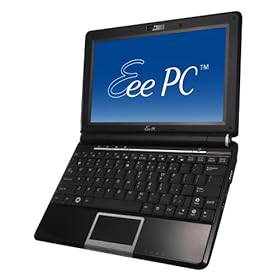
Well , when the whole idea surfaced of mini-laptops , netbooks, UMPC's or whatever your favourite description is for these little PC's is, I thought they could have a great future. Like most people who have worked in IT for many years however, I have heard enough hot air and vapourware announcements to power a hot air ballon around our Galaxy for several millennium. Caution was definitely the order of the day.
It was then with delight that the initial Eeepc 701 that I bought proved to be so useful, and became an immediate favourite. It did have a few limitations, which while not show stoppers, could definitely be improved upon. It was not therefore much of a surprise when Intel and VIA announce new CPU's designed specifically for these new type of machines, they would offer increased battery life for the unit, one of my initial limitations. The other two important things I thought would make these machines a real winner for a much wider audience , were a larger screen and a bigger keyboard.
So about the turn of the year the announcements started, with everyone in Asia it appeared about to launch such an improved device. I looked at all of them with a keen eye, to see if they could offer me the improvements I was looking for. If you looked around, with the likes of HP, MSI, Dell, Acer etc etc, there was a large array of Linux machines going to be made available. I have to say that the Acer Aspire One and the Eeepc 901 both came close, the price being one very important consideration. However, if I was going to replace the original 701, then the new unit had to offer everything I wanted.
Well, Asus then announced their new 1000 series units, with 40GB SSD disk space, 10" screen, Intel Atom processor that seemed to run on fresh air compared to the previous Celeron. A larger keyboard was also something that I would appreciate, and when the price was announced, they were not that much more expensive that their smaller brother the 901.
I have to say the extra expenditure was well worth it, and this new unit has offered the extra facilities that I wanted. Time will tell if there are any little issues that will come out of the woodwork to annoy me, but in the first three weeks, everything I have found out about the unit has been very positive. The increase in battery life is truly exceptional, and delivers 5.5 hrs without fail. The suspend and resume just works with the wifi just reconnecting and the ability to just identify a T-mobile 3G USB key and connect was very impressive. The unit is a little heavier than the 701, but the extra facilities more than compensate for that. Browsing the web and writing documents on the move is a breeze, reading my many digital books is also a real pleasure with the extra screen size. There must be several large laptop manufacturers ripping these little units to pieces in their labs to find out how the heck they do it for this price point. One of the nice new features of this unit is the small row of extra function keys just under the screen. They allow you to change the power usage of the machine, turn off the screens backlight , zoom the screen and start Skype, with just a push of a single button. The two on the right are user definable and can be changed with a built in utility. The addition of bluetooth functionality will be useful to some, but I have to say I have yet to find a use for it.
The software has changed a lot with this release, and Open office has been replaced by Sun's Star Office, which is basically Open Office with some template and filter additions. This move does puzzle me as Star Office is not normally a free item. It could have more to do with the good publicity these units are receiving, so millions of users will get to see Sun's offering. Only Xandros and Sun would know for sure.There have been more games added and I particularly like Mahjong, one of my favourites. Asus have done a deal with Yostore for on-line file storage, which it appears is only available to 901/1000 users. This is again though a service I have never up to now found that useful, but time will tell. It would have been nice to see the version of KDE be bumped up to 3.5, as I use the advanced desktop, when not running Ubuntu from a USB key. It would be really useful if everything worked with Ubuntu, but as I write this it doesn't, and that is one of this units strong points, so I will wait until it does. I have added a few Xandros repositories, which allows me to install some new applications, so all is not lost in the mean time.
I also feel that in the weeks to come with the new Dell 910 Inspiron machine about to be launched that the competition for Linux netbooks that just work is going to intensify. This is excellent news for people who want to start using machines with a low price point of entry and an even better price point for the software they want to run on them. There is no doubt that this choice can only be good for the consumer, as there is now a genuine third way to use an Intel PC. I have felt for a long time that Michael Dell has been totally fed up bowing to the demands of Microsoft, and would have loved the opportunity to use Apples OSX on a line of Dell machines. Being the logical and sensible person he is, it was obvious for selfish reasons, Apple were never going to allow this to happen. Their premium priced hardware is part of their strategy, and it is not something they will give up lightly. He has however discovered a new and better way to achieve this, and Linus Torvalds gave him the answer in the form of Linux. He now has a new and very powerful bargaining chip , and it will be interesting to see how this gets used. The other netbook manufacturers are not going to just give their market share to Dell, but competition can only be good for the products that get produced.
Subscribe to:
Posts (Atom)



 Posts
Posts


