
I keep around an old windows XP virtual machine for things like CV's that agents will only take in word format, and I haven't been bothered to change it over to Google docs yet, but I will. So this VM gets powered up now and again on my Ubuntu Desktop to do this one task, and then it gets put away again.
So I thought I would take the Windows 7 7100 build for a spin and try it in VirtualPC, as I had already built a test VMware one. Well, the install went pretty well and once it had rebooted I was sat with an empty desktop, with no applications again. I fired up IE8 so I could download Mozilla Firefox, and it forced me to go to the Microsoft home page. I then downloaded some anti-virus software - AVG - and installed the Virtual PC drivers, another reboot.
I finally installed all the Microsoft patches and another reboot. It must have taken me about 45mins in total, to end up with a working virtual instance, and all I had installed was a browser and the anti-virus. Now that's OK, as I will put on my copy of Office, and I can continue to edit those CV's, but I then got to thinking about the point of this.
With virtualization and the standard hardware reference model that you get, I don't ever need to upgrade my XP virtual image, and it will continue to work until I can be bothered to move it to Google Apps. I know you won't be able to get security updates etc, but then I don't use it for seriously surfing the web anyway. I can also run it with no network connected if I wanted, and isolate it from the outside world , simply for it's legacy value.
So the question here is, why would I possibly spend £200 on Windows 7, the answer is I won't. When the RC runs out next year, then I will just delete the VM and that might be the driver I need to move over to Google apps completely.
I think a lot of people need to think very hard about upgrading to Windows 7, it might be new and shiny, but what exactly are you getting for you hard earned money. In my opinion not a great deal. Especially when you could go and buy a brand new Acer Netbook for £149 with all the software you could want, and spend the rest on treats for yourself.
Showing posts with label Acer. Show all posts
Showing posts with label Acer. Show all posts
Thursday, 23 July 2009


Thursday, 11 September 2008
Lenovo annoucement is hard to read
Having just read several articles on the fact that Lenovo are changing their strategy towards Linux , the reasons given just don't make any sense to me. The overall argument seems to be that the cost of supporting microsoft on their platforms has been an extremely heavy burden to bare, and they didn't want to duplicate that with another new system. Surely the argument to that is to stop supporting microsoft, and push those support costs back to where they belong, unless there are yet more illegal activities and arm twisting going on than normal. The other glaring hole in this argument is that with Linux you can push the support towards to the community, who will be more than happy to help, or more likely have already fixed any issues that a new user would experience. This appears to me to be very muddled thinking and not much of a strategy at all.
They have though simultaneously announced extra support for Linux across a range of products that will be available to large organisations, plus the launch of their new netbook. This netbook is to go head-to-head with the other Intel Atom suppliers in this ever expanding market, but they are only offering it to certain markets. This is again yet more muddled thinking, from them. Why would you possibly not want to sell units in Europe and North America, surely business is business? With Asus already telling us that they are on course for their 5 million units shipped by the end of the year, and Acer saying their sales are better than expected, it would appear they have got this wrong yet again.
I think the one thing that I can take from this information is that their Linux strategy is in tatters, and they are thrashing around to find a real vision for the future. There are many other companies that have a much better Linux strategy, and they would be the companies that I will be dealing with in the future.
This probably explains why I have never bought anything from this company, and probably never will.
They have though simultaneously announced extra support for Linux across a range of products that will be available to large organisations, plus the launch of their new netbook. This netbook is to go head-to-head with the other Intel Atom suppliers in this ever expanding market, but they are only offering it to certain markets. This is again yet more muddled thinking, from them. Why would you possibly not want to sell units in Europe and North America, surely business is business? With Asus already telling us that they are on course for their 5 million units shipped by the end of the year, and Acer saying their sales are better than expected, it would appear they have got this wrong yet again.
I think the one thing that I can take from this information is that their Linux strategy is in tatters, and they are thrashing around to find a real vision for the future. There are many other companies that have a much better Linux strategy, and they would be the companies that I will be dealing with in the future.
This probably explains why I have never bought anything from this company, and probably never will.
Saturday, 6 September 2008
Disappointing launch of new Dell netbook
Like many others with an interest in the mini laptop market, I have followed the rumours and gossip around the new Dell inspiron mini 9 with a watchful eye. So last week is was announced and I nipped over to the Dell web site to order one with Ubuntu pre-installed. I know I have an Eeepc 1000 which I love and am using now to enter this blog. However, I wanted to have a look at this new Dell, and if the rumours were true, then it would only cost me 200 UK pounds.
Well what a disappointment was waiting for me at the Dell site. The only units that were for sale had windows XP home, which is next to useless, even if you love windows. The price was also a real shocker in to the bargain, they wanted 299 UK pounds for this unit, which is only 60 pounds cheaper than my Eeepc. That is a lot of money for a machine that offers nothing over the Asus unit, has a smaller screen, no function keys, a much smaller internal solid state harddisk (16GB as compared to 40GB), and no decent productivity software pre-installed.
I suppose they would argue that they are selling these in competition to the Asus 901, which has a similar specification , but then I found that the argument for the 901 didn't stack up against the 1000 unit either.
I like Dell machines, and bought one of the XPS1330n with Ubuntu as soon as they were released. However I have always believed you should tell it like it is, and I think they have really dropped an opportunity here, and could pay for it. Time as always will be the judge of that one.
If you are looking to get yourself one of these little netbooks definitely do yourself a favour and check out the Asus 1000 if you want the best size screen in the class or the Acer Aspire one if you decide on a 9" screen version. The former offers you a much larger machine for you money and the later offers you much better value for money with the same specifications.
Well what a disappointment was waiting for me at the Dell site. The only units that were for sale had windows XP home, which is next to useless, even if you love windows. The price was also a real shocker in to the bargain, they wanted 299 UK pounds for this unit, which is only 60 pounds cheaper than my Eeepc. That is a lot of money for a machine that offers nothing over the Asus unit, has a smaller screen, no function keys, a much smaller internal solid state harddisk (16GB as compared to 40GB), and no decent productivity software pre-installed.
I suppose they would argue that they are selling these in competition to the Asus 901, which has a similar specification , but then I found that the argument for the 901 didn't stack up against the 1000 unit either.
I like Dell machines, and bought one of the XPS1330n with Ubuntu as soon as they were released. However I have always believed you should tell it like it is, and I think they have really dropped an opportunity here, and could pay for it. Time as always will be the judge of that one.
If you are looking to get yourself one of these little netbooks definitely do yourself a favour and check out the Asus 1000 if you want the best size screen in the class or the Acer Aspire one if you decide on a 9" screen version. The former offers you a much larger machine for you money and the later offers you much better value for money with the same specifications.
Friday, 5 September 2008
Linux netbooks selling extremely well in the UK
Having checked the latest bestseller charts on Amazon over the last two weeks there is one obvious fact that jumps out at you, and that is the rise and rise of the Linux netbook computer. Only this morning, the number one selling unit is the Acer Aspire One with Linpus Linux, and 50% of the top 10 have Linux pre-installed. I also think that Acer have got their pricing spot on, and are making a few other competitors, Dell, look very flat footed.
I think this market is very well suited to Linux, as the crippled version of windows XP home that is supplied on this machines is far less compatible with a modern working environment than is Linux. The powerful facilities offered by Linux , like a built in full feattured office suite, and much better connectivity to a corporate network bode well.
It is refreshing to see this change in the UK, as Britons are conservative by nature, and have had microsoft products stuffed down their throats for so long in school and work, that they seem almost joined at the hip. It is always amazing to me to see the surprise on peoples faces when they see just how powerful and user friendly modern Linux is.
It is good to see choice has broken out in this sector, which is excellent news for everyone, including the microsoft lovers, as they are now going to have to innovate in this sector to stay competitive, as XP is not going to be around for ever, and vista is deader than the dinosaurs, which it truely resembles.
I think this market is very well suited to Linux, as the crippled version of windows XP home that is supplied on this machines is far less compatible with a modern working environment than is Linux. The powerful facilities offered by Linux , like a built in full feattured office suite, and much better connectivity to a corporate network bode well.
It is refreshing to see this change in the UK, as Britons are conservative by nature, and have had microsoft products stuffed down their throats for so long in school and work, that they seem almost joined at the hip. It is always amazing to me to see the surprise on peoples faces when they see just how powerful and user friendly modern Linux is.
It is good to see choice has broken out in this sector, which is excellent news for everyone, including the microsoft lovers, as they are now going to have to innovate in this sector to stay competitive, as XP is not going to be around for ever, and vista is deader than the dinosaurs, which it truely resembles.
Sunday, 31 August 2008
The Eeepc 1000 - what a great machine
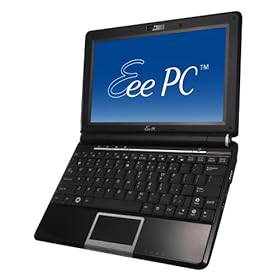
Well , when the whole idea surfaced of mini-laptops , netbooks, UMPC's or whatever your favourite description is for these little PC's is, I thought they could have a great future. Like most people who have worked in IT for many years however, I have heard enough hot air and vapourware announcements to power a hot air ballon around our Galaxy for several millennium. Caution was definitely the order of the day.
It was then with delight that the initial Eeepc 701 that I bought proved to be so useful, and became an immediate favourite. It did have a few limitations, which while not show stoppers, could definitely be improved upon. It was not therefore much of a surprise when Intel and VIA announce new CPU's designed specifically for these new type of machines, they would offer increased battery life for the unit, one of my initial limitations. The other two important things I thought would make these machines a real winner for a much wider audience , were a larger screen and a bigger keyboard.
So about the turn of the year the announcements started, with everyone in Asia it appeared about to launch such an improved device. I looked at all of them with a keen eye, to see if they could offer me the improvements I was looking for. If you looked around, with the likes of HP, MSI, Dell, Acer etc etc, there was a large array of Linux machines going to be made available. I have to say that the Acer Aspire One and the Eeepc 901 both came close, the price being one very important consideration. However, if I was going to replace the original 701, then the new unit had to offer everything I wanted.
Well, Asus then announced their new 1000 series units, with 40GB SSD disk space, 10" screen, Intel Atom processor that seemed to run on fresh air compared to the previous Celeron. A larger keyboard was also something that I would appreciate, and when the price was announced, they were not that much more expensive that their smaller brother the 901.
I have to say the extra expenditure was well worth it, and this new unit has offered the extra facilities that I wanted. Time will tell if there are any little issues that will come out of the woodwork to annoy me, but in the first three weeks, everything I have found out about the unit has been very positive. The increase in battery life is truly exceptional, and delivers 5.5 hrs without fail. The suspend and resume just works with the wifi just reconnecting and the ability to just identify a T-mobile 3G USB key and connect was very impressive. The unit is a little heavier than the 701, but the extra facilities more than compensate for that. Browsing the web and writing documents on the move is a breeze, reading my many digital books is also a real pleasure with the extra screen size. There must be several large laptop manufacturers ripping these little units to pieces in their labs to find out how the heck they do it for this price point. One of the nice new features of this unit is the small row of extra function keys just under the screen. They allow you to change the power usage of the machine, turn off the screens backlight , zoom the screen and start Skype, with just a push of a single button. The two on the right are user definable and can be changed with a built in utility. The addition of bluetooth functionality will be useful to some, but I have to say I have yet to find a use for it.
The software has changed a lot with this release, and Open office has been replaced by Sun's Star Office, which is basically Open Office with some template and filter additions. This move does puzzle me as Star Office is not normally a free item. It could have more to do with the good publicity these units are receiving, so millions of users will get to see Sun's offering. Only Xandros and Sun would know for sure.There have been more games added and I particularly like Mahjong, one of my favourites. Asus have done a deal with Yostore for on-line file storage, which it appears is only available to 901/1000 users. This is again though a service I have never up to now found that useful, but time will tell. It would have been nice to see the version of KDE be bumped up to 3.5, as I use the advanced desktop, when not running Ubuntu from a USB key. It would be really useful if everything worked with Ubuntu, but as I write this it doesn't, and that is one of this units strong points, so I will wait until it does. I have added a few Xandros repositories, which allows me to install some new applications, so all is not lost in the mean time.
I also feel that in the weeks to come with the new Dell 910 Inspiron machine about to be launched that the competition for Linux netbooks that just work is going to intensify. This is excellent news for people who want to start using machines with a low price point of entry and an even better price point for the software they want to run on them. There is no doubt that this choice can only be good for the consumer, as there is now a genuine third way to use an Intel PC. I have felt for a long time that Michael Dell has been totally fed up bowing to the demands of Microsoft, and would have loved the opportunity to use Apples OSX on a line of Dell machines. Being the logical and sensible person he is, it was obvious for selfish reasons, Apple were never going to allow this to happen. Their premium priced hardware is part of their strategy, and it is not something they will give up lightly. He has however discovered a new and better way to achieve this, and Linus Torvalds gave him the answer in the form of Linux. He now has a new and very powerful bargaining chip , and it will be interesting to see how this gets used. The other netbook manufacturers are not going to just give their market share to Dell, but competition can only be good for the products that get produced.
Subscribe to:
Posts (Atom)



 Posts
Posts


